Like most people, I like to shoot steel targets. They offer many advantages over paper, starting with the instant feedback—hit the target, hear the ring. Plus I don’t need staples, tape or a target backer, just a can of spray paint. And if the wind is strong enough to move a steel target, there is little point trying to train.
But there are some downsides as well.
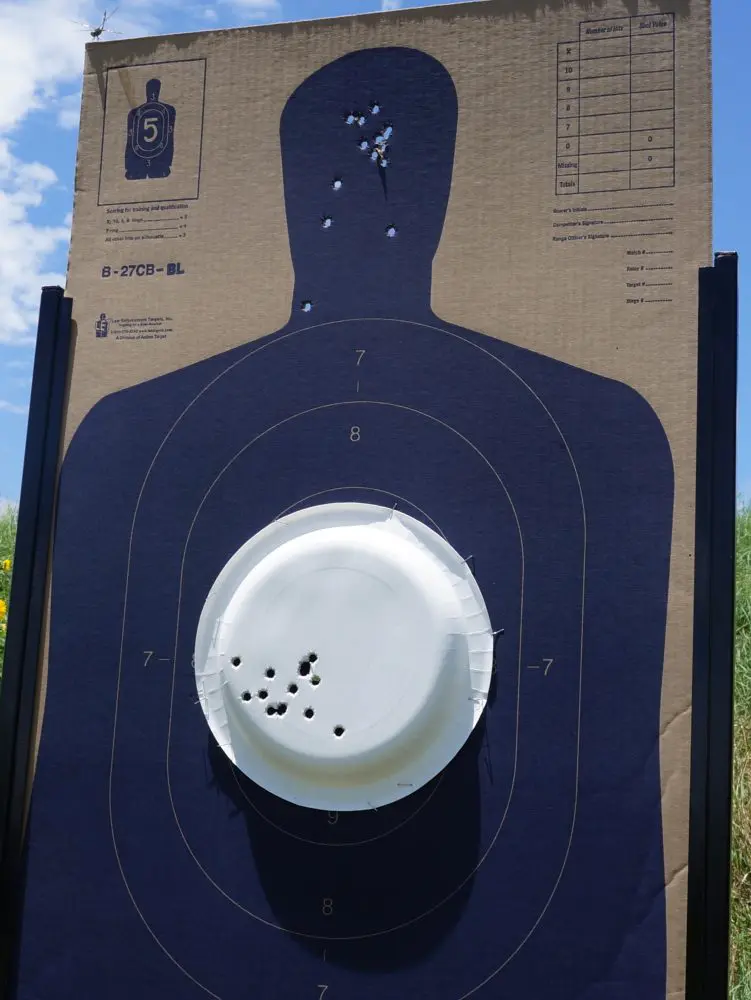
Some ranges don’t allow them, there is splatter as the bullet breaks up on impact, and they are heavy. In the area of splatter, as an IPSC range officer for more than 30 years, there is not one part of my body that has not been hit by splatter. Oh, it’s very small, but at high velocities, it can break the skin. Thus the absolute requirement for eye protection. Another issue with steel is the lack of precision in measuring group size.
If you have access to a private range, steel targets are great. Fire the shot, hear the hit. But if you are on a range with other shooters, you may not hear your hit, even if you are the only one shooting steel, as it can be masked by other gunfire.
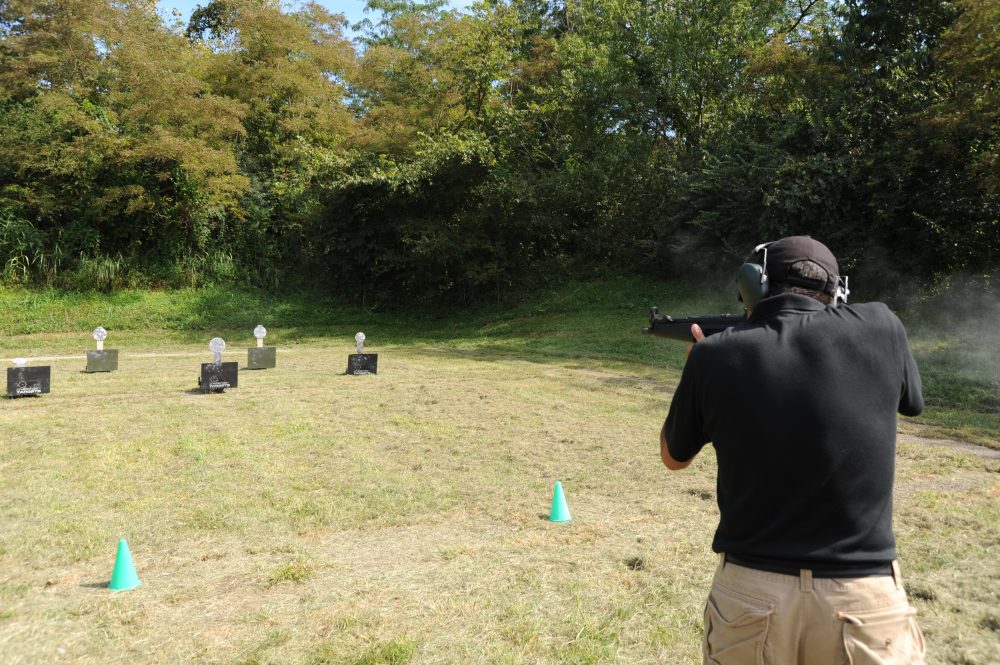
Shooter engages numerous Challenge Targets in training exercise. Photo: Challenge Targets
I have another issue, as a negligent discharge a friend had with a rifle in my apartment back in college instantly gave me tinnitus. Now the phone is always ringing—in my head. Even electronic earmuffs do not solve that problem.
The first such targets were the U.S. Military hit-sensitive targets, which sense the impact of a round (the “impact plate” is plastic) and drop the target. But the electronics are relatively delicate, the system is wired together, is very expensive, and does not lend itself to being moved. Commercial dropping target systems generally use batteries that must be recharged and add to the weight you have to haul downrange.
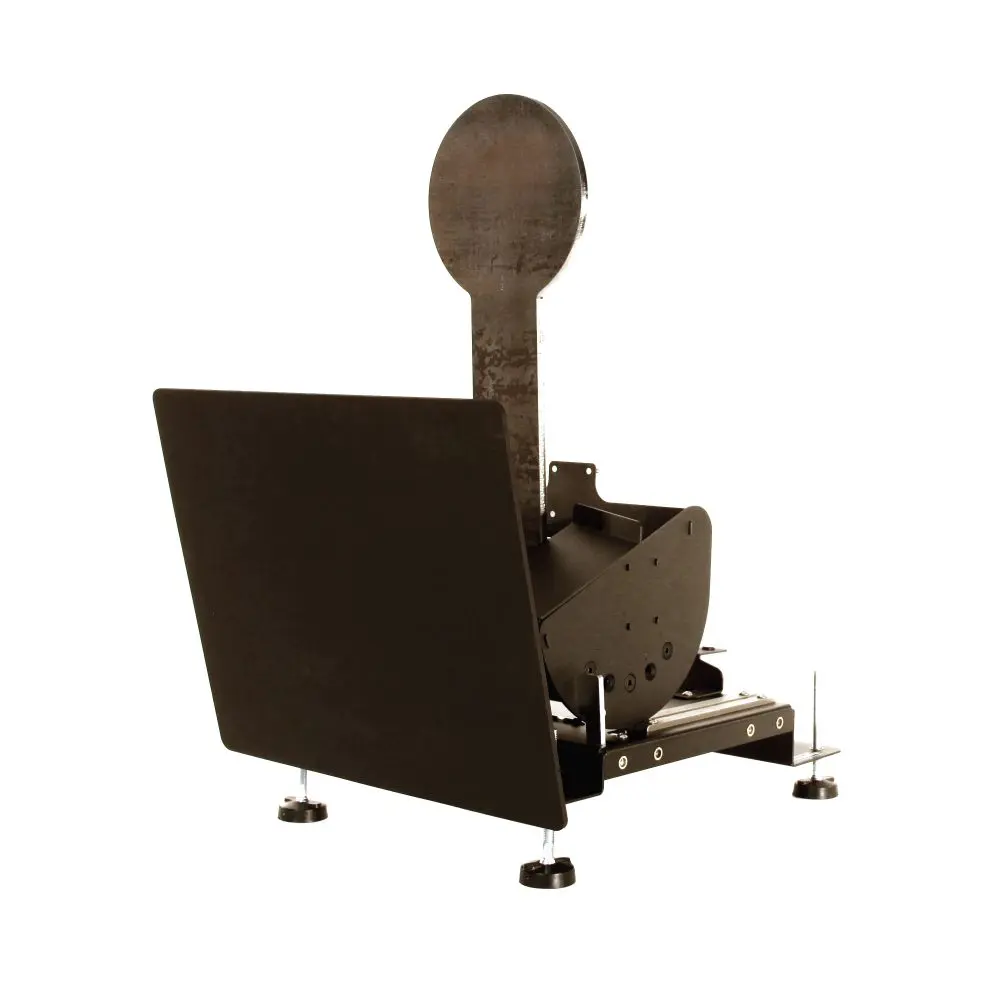
I have found a solution—the products of Challenge Targets. These produce both sound and motion to show if you hit. Challenge uses the ever-present force of gravity to create a series of reactive self-resetting targets. They come in two boxes, with “some assembly required.”
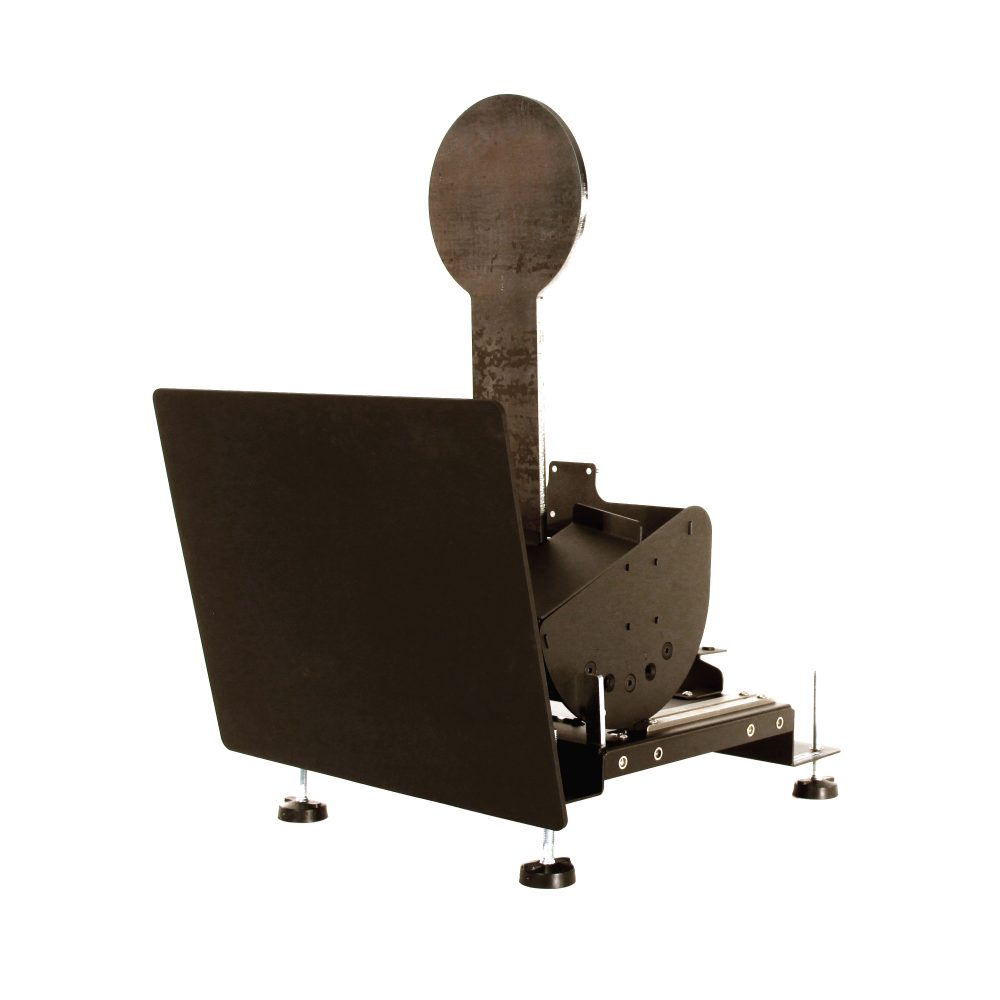
For rifle rounds, the replaceable paddle is all steel. Mechanism is protected by heavy armor shield. Photo: Challenge Targets
I have become famous (or is it infamous?) locally for my inability to assemble the simplest project. After I re-read the instructions, even I could assemble the Challenge system! Once all the parts are bolted into their proper locations, there are three assemblies: level the base, place the weighted upper assembly in the grooves, and insert the reversible, replaceable impact plate.
For testing, I requested the unit suitable for 5.56 ammo, which can be adjusted for light 9mm rounds as well. (Challenge Targets also makes systems for pistol only, and rifle up to heavy .30 cals.) The unit moves on impact, so splatter is greatly reduced, as much of the energy is absorbed moving the upper assembly. By varying the angle of the base, you can make the upper rock back quickly or slowly.
The system is designed to be subjected to heavy use, but a low errant shot could damage the upper unit. I equipped my sample with the shield, which adds more weight and bulk but seems prudent.
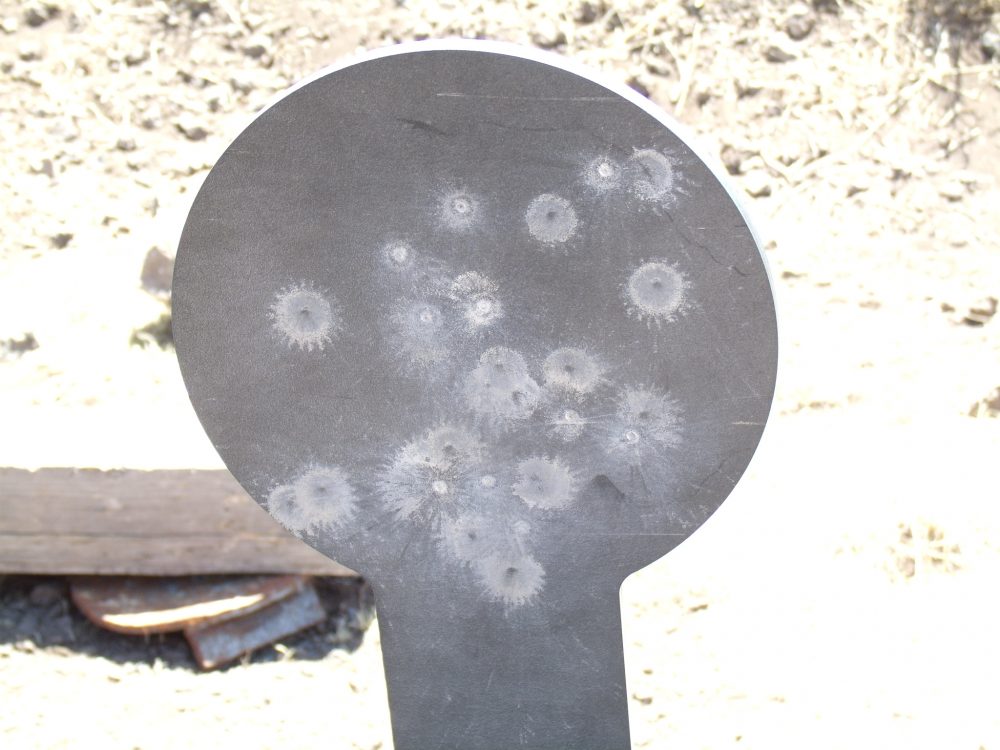
.223 rated paddle shows marks on the paint from .223 (from 100 yards) and 9mm (from 10 yards). Not even a slight dimple was on the plate.
I started out using the system with a 9mm handgun. What passes for soil where I live is too loose to rely on the built-in leveling feet: they started to sink in unevenly as I fired. A simple plank under the feet on each side stopped that. Minor adjustments to the feet changed how far the impact plate moved and how quickly it recovered. A somewhat larger adjustment was needed to set it for 5.56, so I could see the target recover through the sights on my rifle.
As with all steel targets, there are distance minimums—ten yards for pistol and 100 yards for the 5.56 round. Getting closer runs the dual risks of getting hit with high-velocity splatter and damaging the target, especially with the rifle rounds.
For tactical courses or training, these targets give instant feedback and can absorb hundreds of quick hits—true rock ‘n’ roll. With the heavier plates, photo “head” targets can be attached, giving the snipers a realistic target with instant feedback. Paper targets can be set on the system as well. It quickly becomes addictive and can be the cause of increased ammo consumption and your becoming a better shot!
And on the range, you can sit back and relax while the other shooters trudge downrange to paste and post their paper targets.
Seth Nadel retired after serving 27 years as a Senior Special Agent with U.S. Customs. He was a firearms instructor for 25 years, including nine years as the lead firearms instructor at the Tucson Customs Academy.
SOURCE:
Challenge Targets
(800) 859-5841
www.challengetargets.com