We have all heard the old saying, “Practice makes perfect.” A better way to say it is, “Only perfect practice makes perfect.” In other words, if you are practicing something the wrong way, you are only ingraining bad habits, so why practice at all?
Also, practice is not the same thing as training, though they go hand-in-hand. We train to learn and develop skill sets. We practice to retain and sharpen those skill sets.
Both environments need to be as safe as possible, which is one reason I utilize plastic firearm simulators, specifically Ring’s Manufacturing Blue Guns, in classes I teach. In fact, Ring’s motto is “Train safe and train smart.”
The majority of classes my Dad and I teach are basic concealed weapon permit and intro-level handgun courses. I have found Blue Guns to be an invaluable asset.
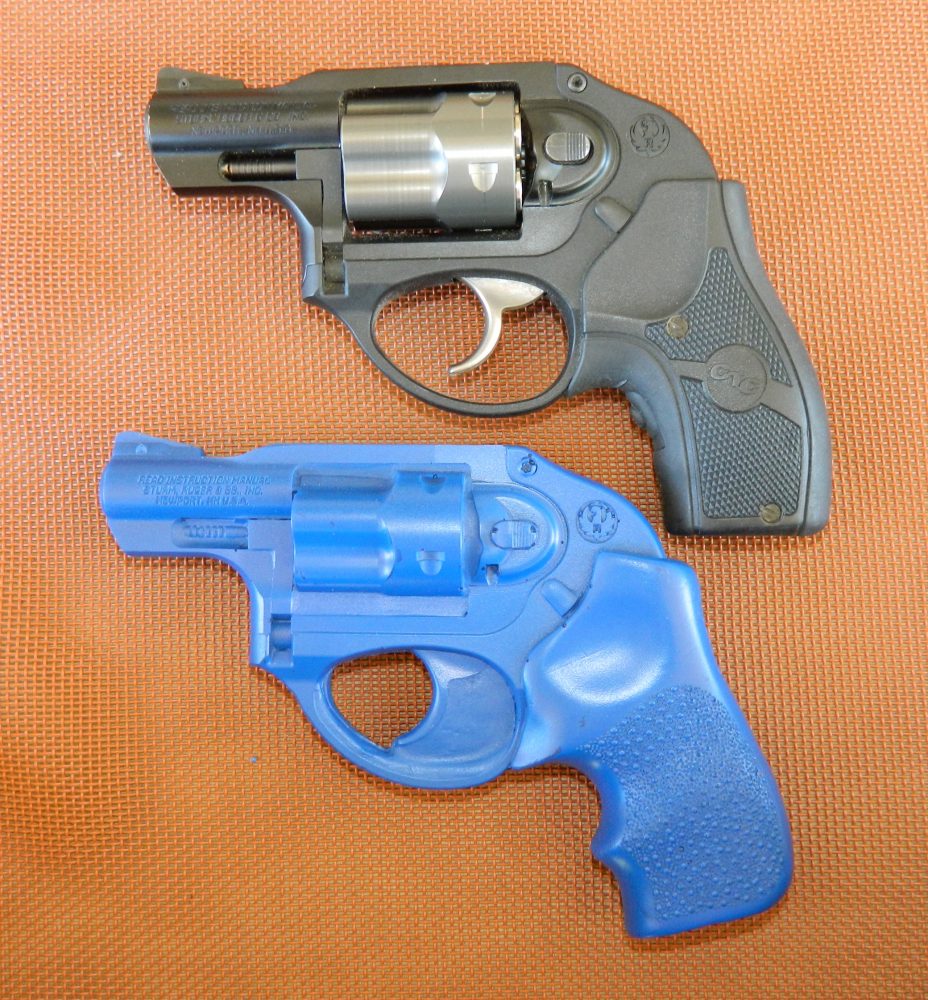
Ring’s Manufacturing Blue Guns are the most detailed firearm simulators I have seen, right down to the visible manufacturers’ logos and serial numbers.
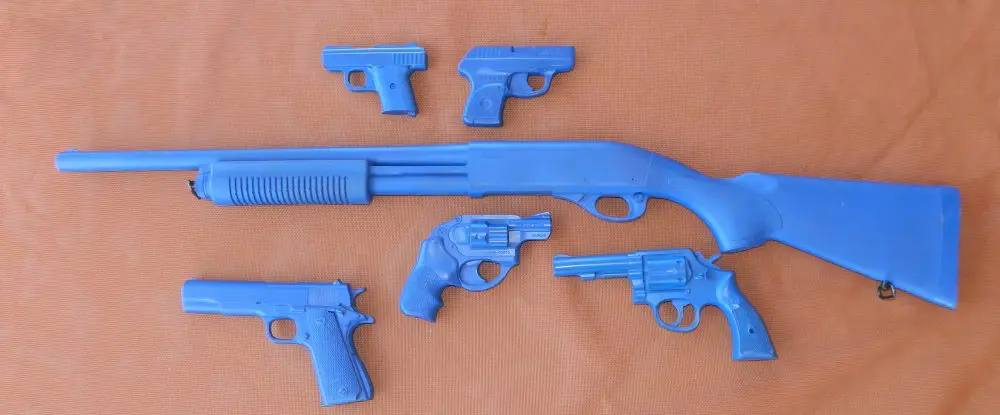
Ring’s also has, without a doubt, the most extensive line, from a Raven .25 auto to an M60 machine gun and virtually everything in between. Broomhandle Mausers? Yep. Add in the Thompson submachine gun, Luger, M1 Rifles and M1 Carbines, lever guns, single-action Colt Peacemakers, double-barreled shotguns, and more. In short, if you want a replica of almost any conceivable gun, Ring’s probably makes it.
Besides being an easily recognized safety color, each “firearm” is made from impact-resistant polyurethane with steel reinforcements molded in. This prevents flexing while closely simulating the balance and feel of their cartridge-firing counterparts.
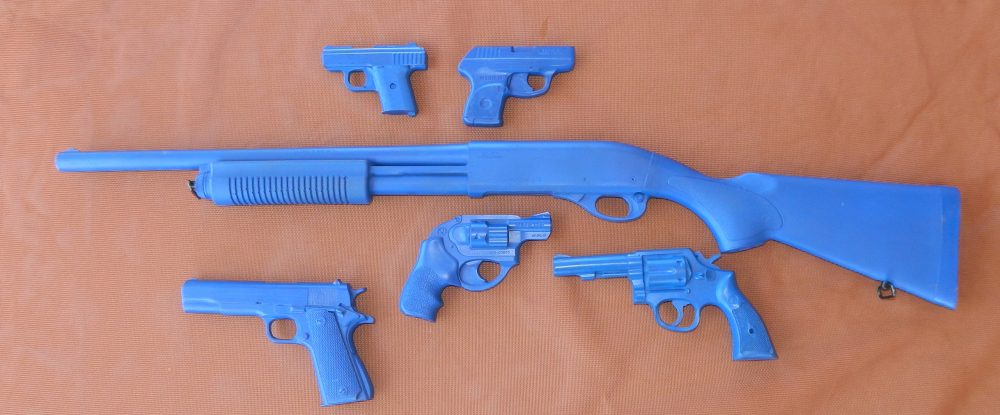
Sampling of Ring’s Manufacturing Blue Guns used by author for instructional purposes.
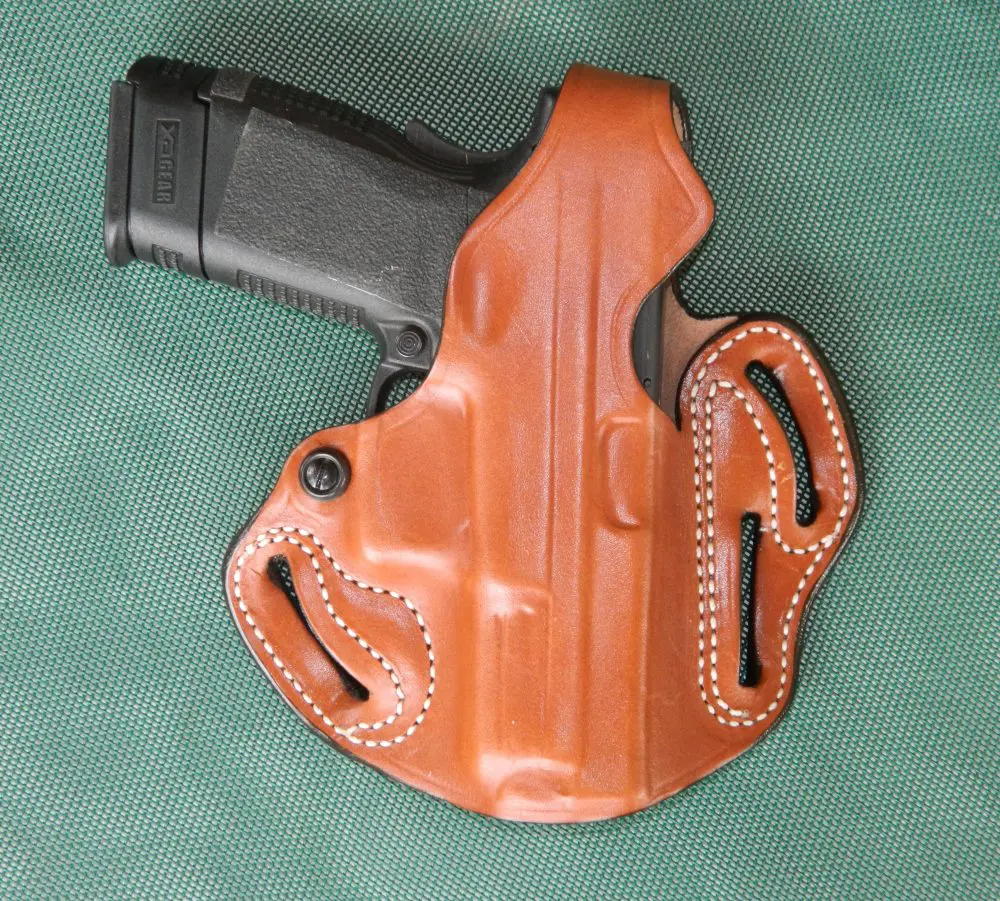
I take a large box of holsters to every class to show how many types are available. The numerous offerings can be mind boggling—especially to a novice—and what works for one student may not work for another. Trying different holster types with Blue Guns reduces the possibility of a tragedy occurring in the classroom or on the range.
Speaking of the range, Blue Guns are used for a variety of demonstrations there, beginning with the proper firing grip. Along with verbal instruction, students can see up close the position of both my hands.
I won’t point a real gun toward students even if it has been unloaded and checked by at least two people. When demoing the drawstroke, breaking it down step-by-step, with a Blue Gun students not only get a left and right profile of what it looks like, but also straight on. The same thing applies when demonstrating different shooting stances.
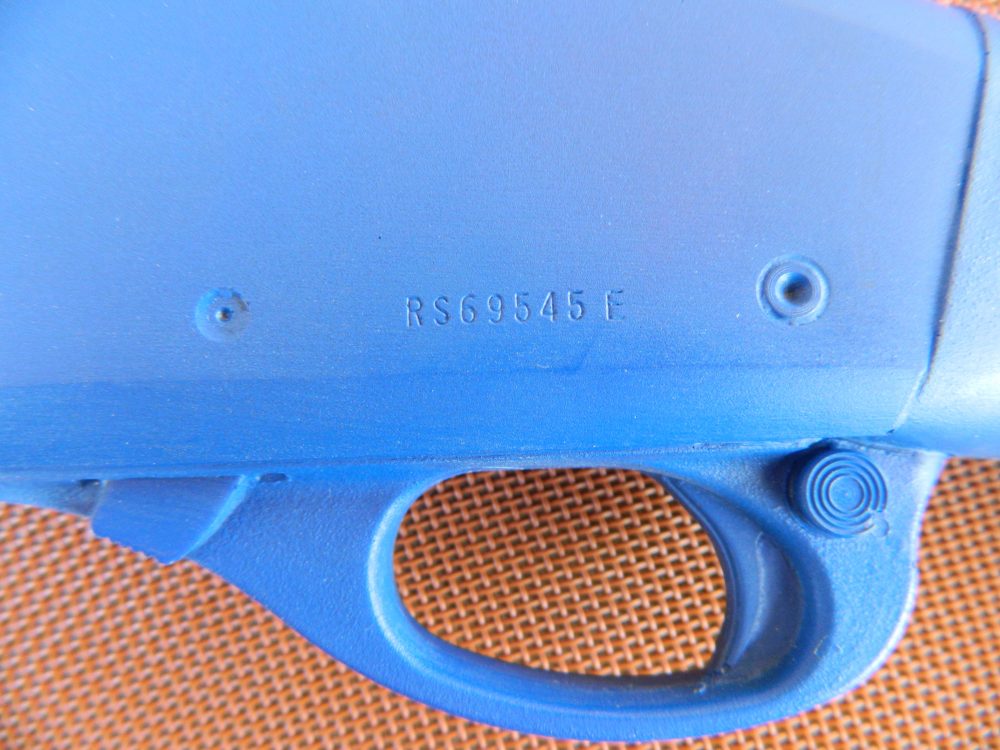
Even serial numbers, such as on the Remington 870 replica, can be easily read.
I especially like Blue Guns when instructing positional shooting. With a firearm simulator, I encourage students to walk around me while I’m in a position rather than looking at my backside. They can see from all angles how my hands, elbows and feet are placed to form the position.
Another thing that Blue Guns are great for is practicing weapon retention and takeaways. Even when a real firearm is unloaded and verified by several people, the possibility exists that something will go sideways and a loaded round will find itself in a chamber. Muzzles will cover people during these exercises, and Blue Guns are the obvious choice. There are no “accidents” in training—only negligent tragedies.
There is no such thing as “muscle memory” for the simple reason that muscles don’t have memory—unless you count the gray matter between your horns as a muscle. A better term, to me at least, is instinctual movements. An analogy would be that you don’t consciously think about flicking off the safety on your pistol as the front sight comes on target any more than you consciously think about applying the brake on your vehicle when approaching a red light.
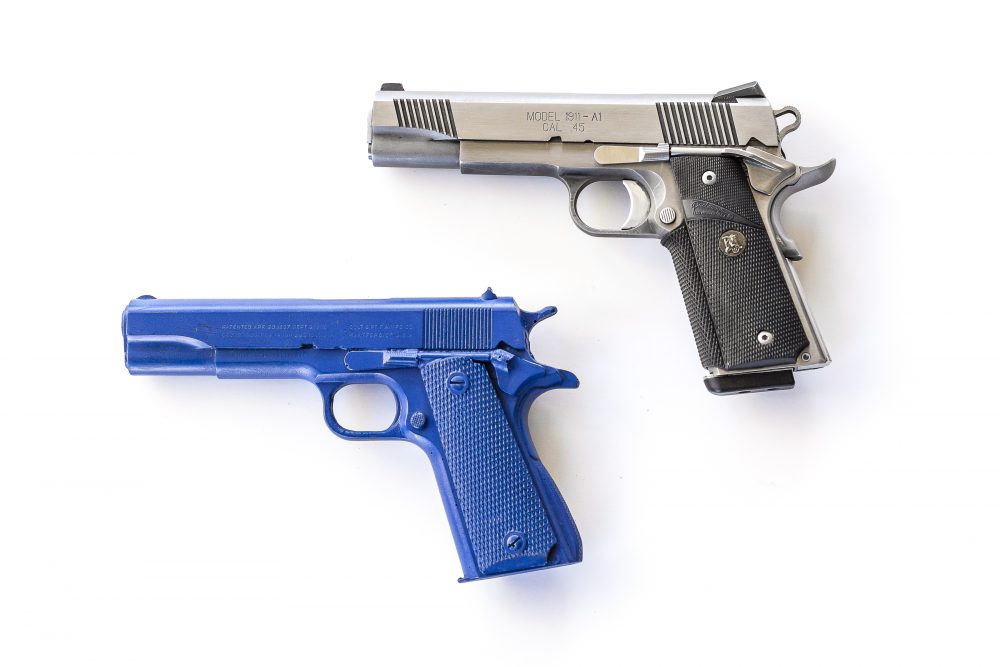
Customized 1911A1 and Ring’s 1911. Photo: Shaun Barnette
But for a movement such as the drawstroke to become instinctual, it requires literally thousands of repetitions, and dry fire is a good way to stay tuned up. Unfortunately, I have heard many stories of negligent discharges occurring during or immediately after dry fire was “over”—including one that involved a student killing his buddy in their motel room while attending a pistol course.
Using Blue Guns for dry fire will allow you to get the many repetitions that you need to perform, including simulating trigger press while maintaining sight alignment in a safe manner.
I believe in the many benefits of Ring’s Manufacturing Blue Guns and recommend them highly.
SOURCE:
Ring’s Manufacturing
(321) 951-0407
www.blueguns.com